

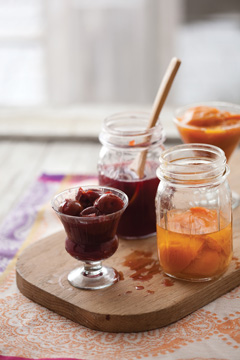
 story by Amy StansburySummer is here, but before long the season will pass and so will the sweet taste of sun-ripened fruit. For years, food blogger—and Grid contributor—Marisa McClellan has been sharing her recipes, tips and secrets to keeping those fruits (and much more) available all year long through canning. Now, McClellan is sharing her insights in a new book, Food in Jars: Preserving in Small Batches Year Round. Filled with endearing stories of her personal love affair with jams and jellies, the book is stocked with mouth-watering recipes (including chapters on foods like pickles and syrups) specifically for small batches in tiny kitchens. Grid recently had a chance to talk with McClellan during her book tour and find out more about canning culture.
Why preserve food in jars?
Marisa McClellan: It is all about the practice of buying low and selling high. In the summer you can buy large amounts of cheap produce and then enjoy it all year. You also support local farmers and extend your fresh produce season.
Aren’t jams and jellies only for spreading on toast? How else can they be used?
MM: You can whisk them into olive oil and vinegar as a salad dressing, you can use them as glazes for meat and you can use them to fill a tart. My favorite way to eat jam is to mix it into yogurt for breakfast.
Jelly, jam, marmalade—what’s the difference?
MM: Jelly is made from fruit juice, jam is preserve made with whole fruit, marmalade is made from citrus with the rind, and preserves are made without pectin and are much runnier and chunkier.
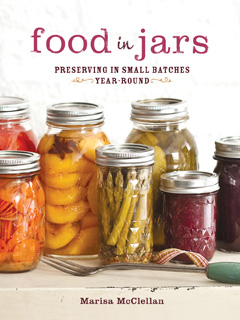 Food in Jars: Preserving in Small Batches Year Round by Marisa McClellan (Running Press, 240 pp., $23, May 2012)What is the easiest canning recipe for beginners?
MM: Start small and start with pickles. Refrigerator pickles are the easiest because they don’t require processing. Then delve deeper into canning and try out new things.
Any other advice for those new to canning?
MM: A lot of people try to reduce the sugar, but jams and jellies won’t set without it, and so they end up as syrup. My biggest advice is that no batch is ever a failure; just change your expectations about it. Be flexible.
For more, including McClellan’s book tour plans, visit foodinjars.org

She told me that she heard a zombie goin' through her trash the other day. The next mornin', she turned up missin'!
bear costume
cosplay costumes
big teddy bears
She told me that she heard a zombie goin' through her trash the other day. The next mornin', she turned up missin'!
bear costume
cosplay costumes
big teddy bears
Book is the way to prepare yourself for everything that can occur very smoothly but you don't want to do it in a proper way. Book related investigation of people will continue till the necessity of invention continuing. Book is the only one gateway through which you can gather a huge amount of knowledge from book in order to invent a new thing. People mostly like to do everything very easily. And one of the easy processes ways is book.
Book is the way to prepare yourself for everything that can occur very smoothly but you don't want to do it in a proper way. Book related investigation of people will continue till the necessity of invention continuing. Book is the only one gateway through which you can gather a huge amount of knowledge from book in order to invent a new thing. People mostly like to do everything very easily. And one of the easy processes ways is book.